
What’s going on in Sciences?
NASS-LASU proved us wrong, once again.

Every election leaves behind a winner, “some” leave behind trails of unanswered questions, surprisingly the recently concluded NASS-LASU Elections tendered both with a mix of “something has gone wrong” vibe.
The theme of the election was indeed anything but straightforward, grounded with surrounding issues like candidate controversy and afternoon ballot fight.
The entire student body of the science faculty that once harboured a growing expectation towards the election in hope for a brighter administration were left with a seemingly debated electoral process within the faculty this session.
Campaign promises? In shambles! Candidate preference? definitely not a catch!
Sit tight for a peek into what happened during the NASS-LASU Elections
The Race
Across the faculty, the preparation for the election had already gathered momentum, posters and banners flooded WhatsApp screens with different candidates declaring their solemn intent for a noble contest.
However, the keen focus for the election circled around the presidential representatives particularly with the emergence of two candidates; TAIWO Daniel Oluwadamilare(OMOOBA)—the former welfare director for the faculty, and a fellow aspirant FOLORUNSHO Habeeb from the Chemistry department.
Between the two candidates, Omooba appeared to be on the clearer coast with the student populace but NASS-LASU IEC sent him off the presidential track.
IEC & Omooba
The screening results were released on the 23rd of May 2026, and everyone believed he had secured a better stand.
However, the screening results released by the Independent Electoral Committee under the chairmanship of OGHENETEGA Chidi was A SHOCKER.
Omooba was declared “not qualified” for the presidential race.
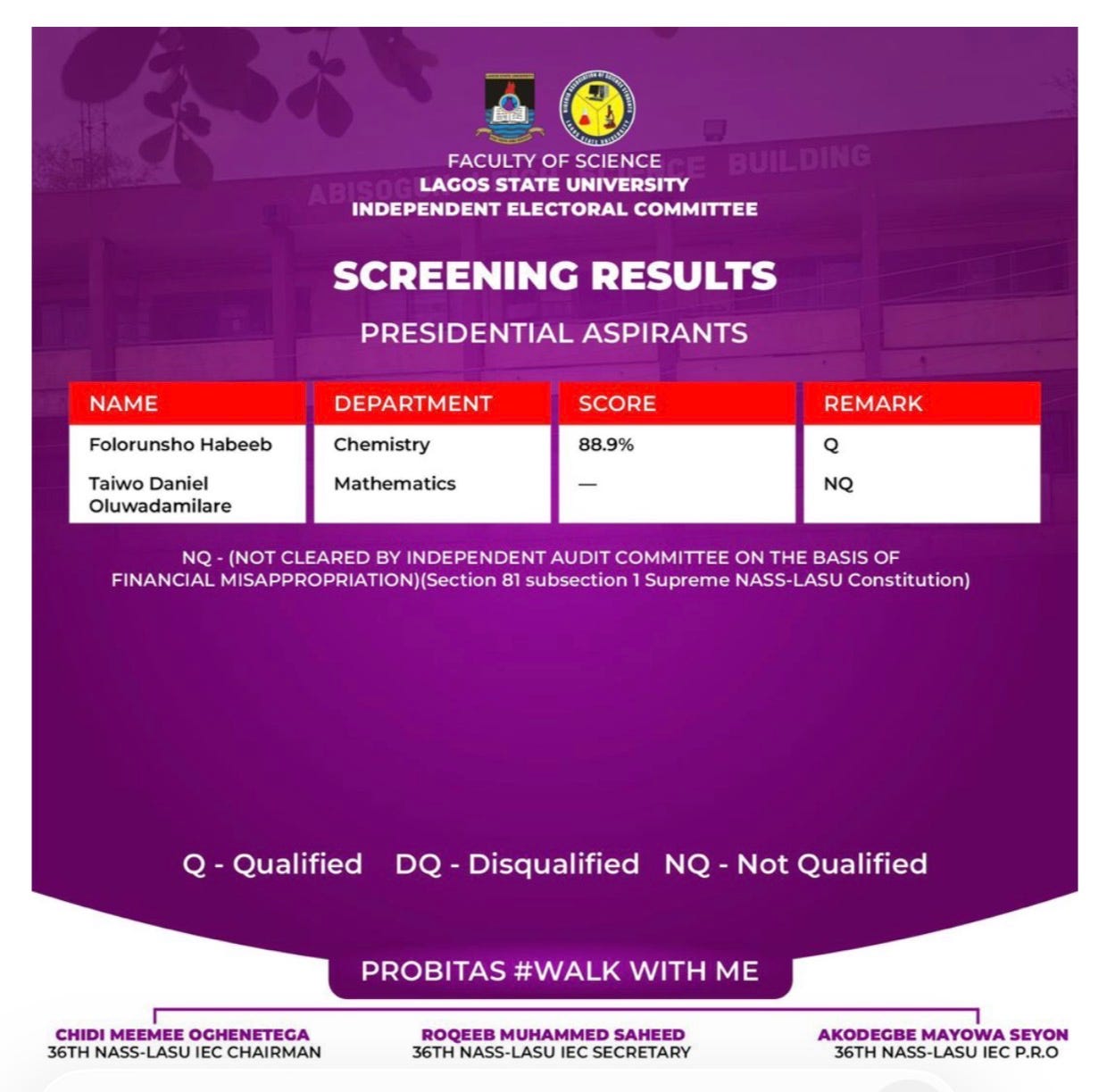
While the committee cited allegations relating to Omooba’s past rumour of financial misappropriation during his tenure as the welfare director of the faculty, the announcement immediately generated reactions among the students calling for greater transparency regarding the abrupt disqualification without clear proof.
Now it wasn’t just about Omooba, the conversation gradually shifted from candidacy to broader questions about accountability and due process within the electoral committee.
Before the ballots were counted, the election was already fighting for credibility.
Petitions & DSA Intervention
Following the backlash that trailed the disqualification controversy, supporters of the aspirant reached out to LASU Life Editor-in-Chief, to call for intervention of the Dean of Student Affairs(DSA) and the suspension of the election process pending a thorough examination of the case.
Supporters argued that the allegation of financial mismanagement had previously been investigated by the Independent Audit Committee (IAC) and dismissed by the DSA during Omooba’s tenure as Welfare Director, raising questions about its re-emergence as grounds for disqualification.
In response to the growing concerns, LASU Life published a press statement highlighting students’ demands for “greater transparency” and a reassessment of the screening outcome.
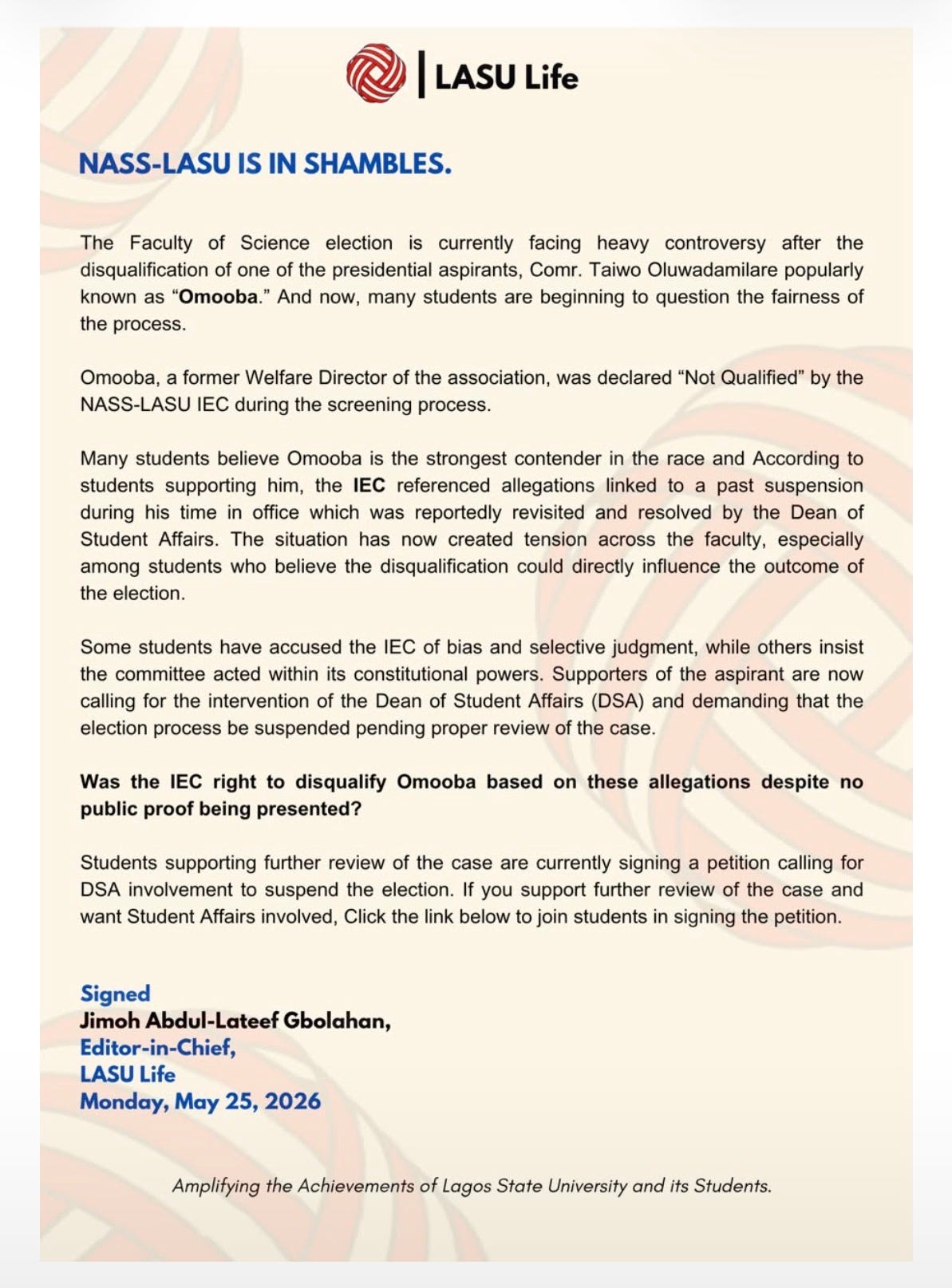
This was followed by a petition urging the involvement of the DSA and a closer scrutiny of the circumstances surrounding the disqualification.
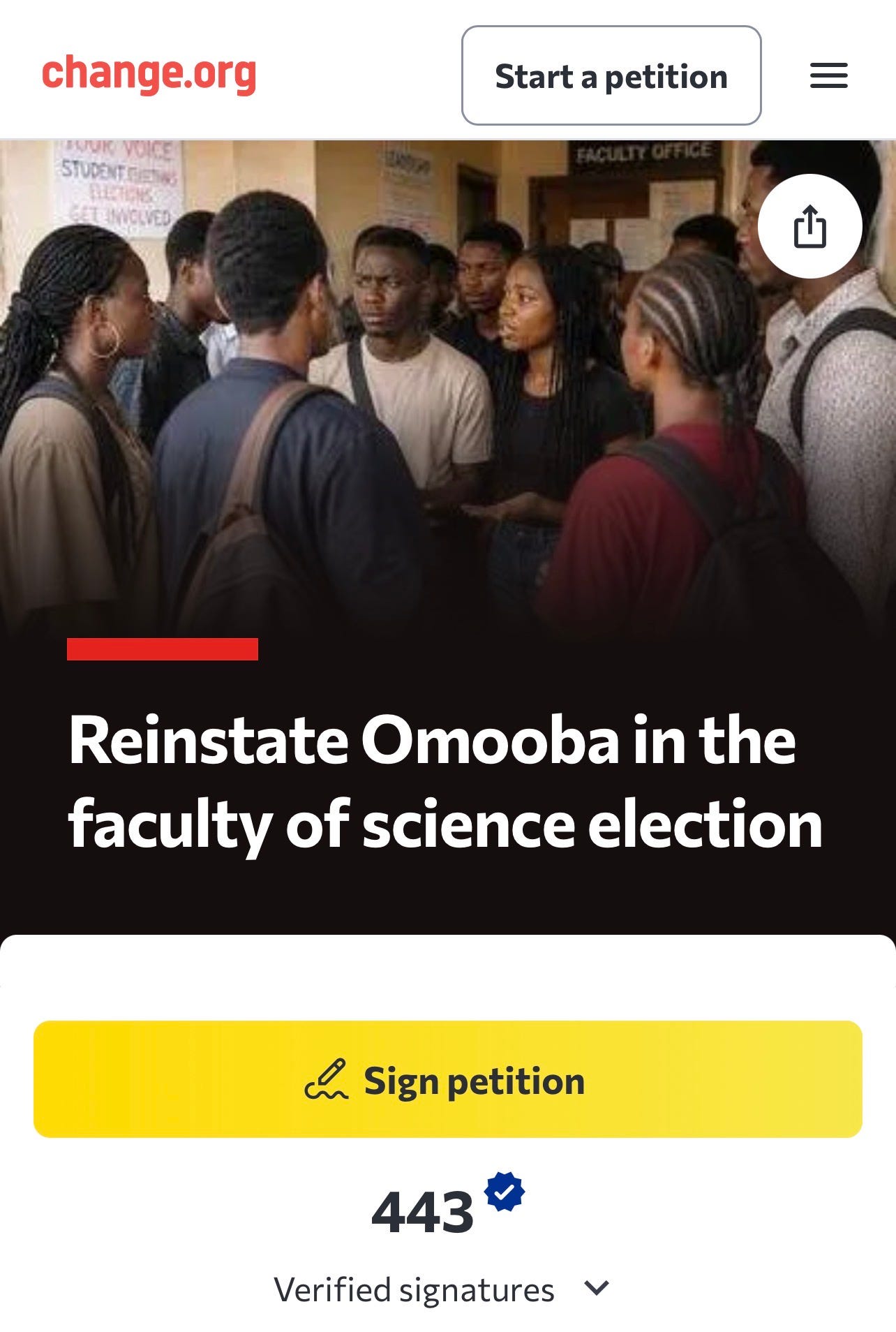
The Suspension
As predicted, the petitions produced a significant outcome. The Presidential Election previously scheduled to hold on May 26, 2026 was suspended.
The suspension came barely hours after LASU Life’s press statement and petition campaign amplified students’ concerns over transparency and fairness in the electoral process.
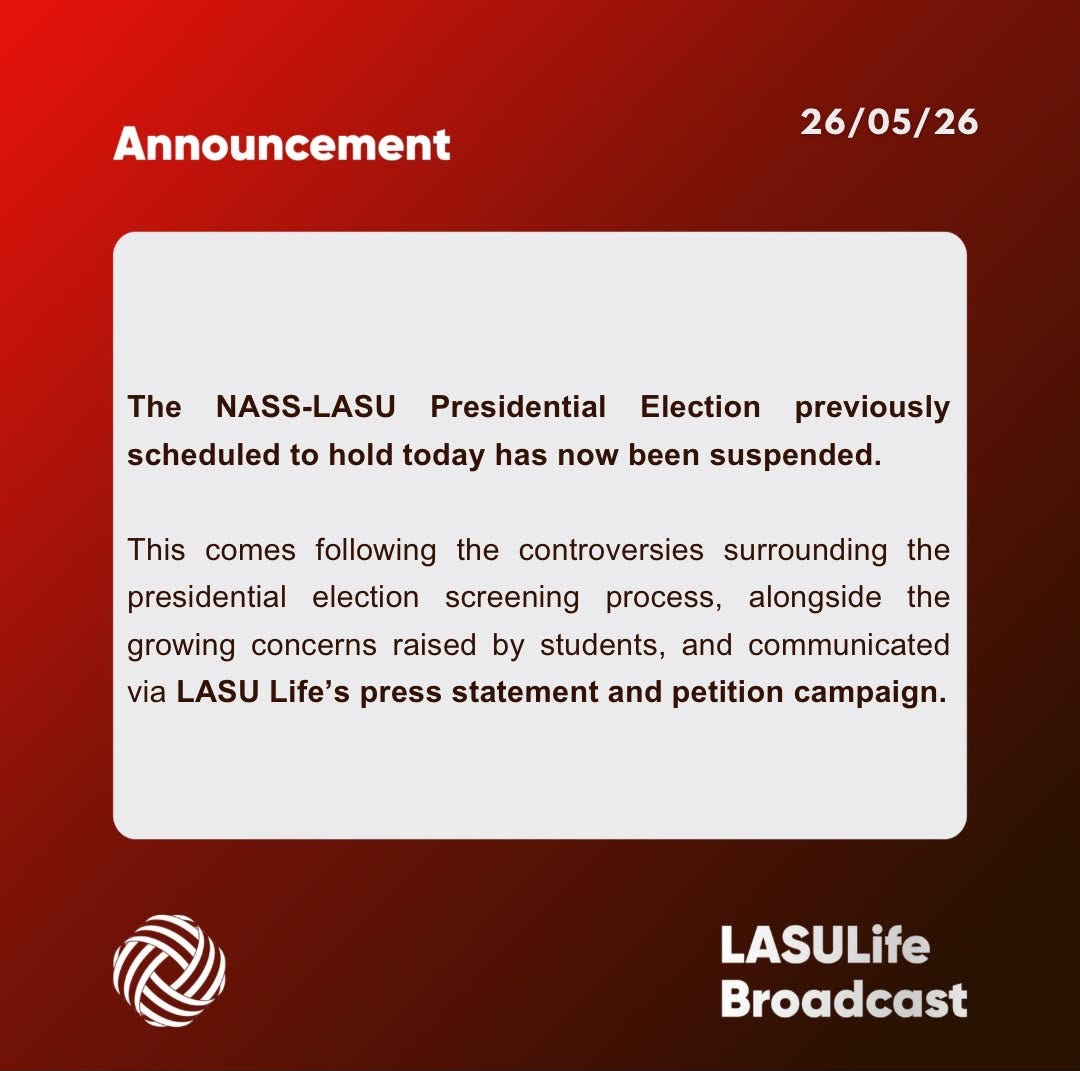
While the suspension provided temporary relief from the situation, students raised concern about the electoral process, describing it as the election that “slammed brakes while speeding on a highway.”
The Verdict
On June 2nd, the LASUSU High Court held a public hearing involving both parties at the Okunuga Moot Court with the court judgment bringing one of the most talked-about controversies of the NASS-LASU election season to a legal conclusion.
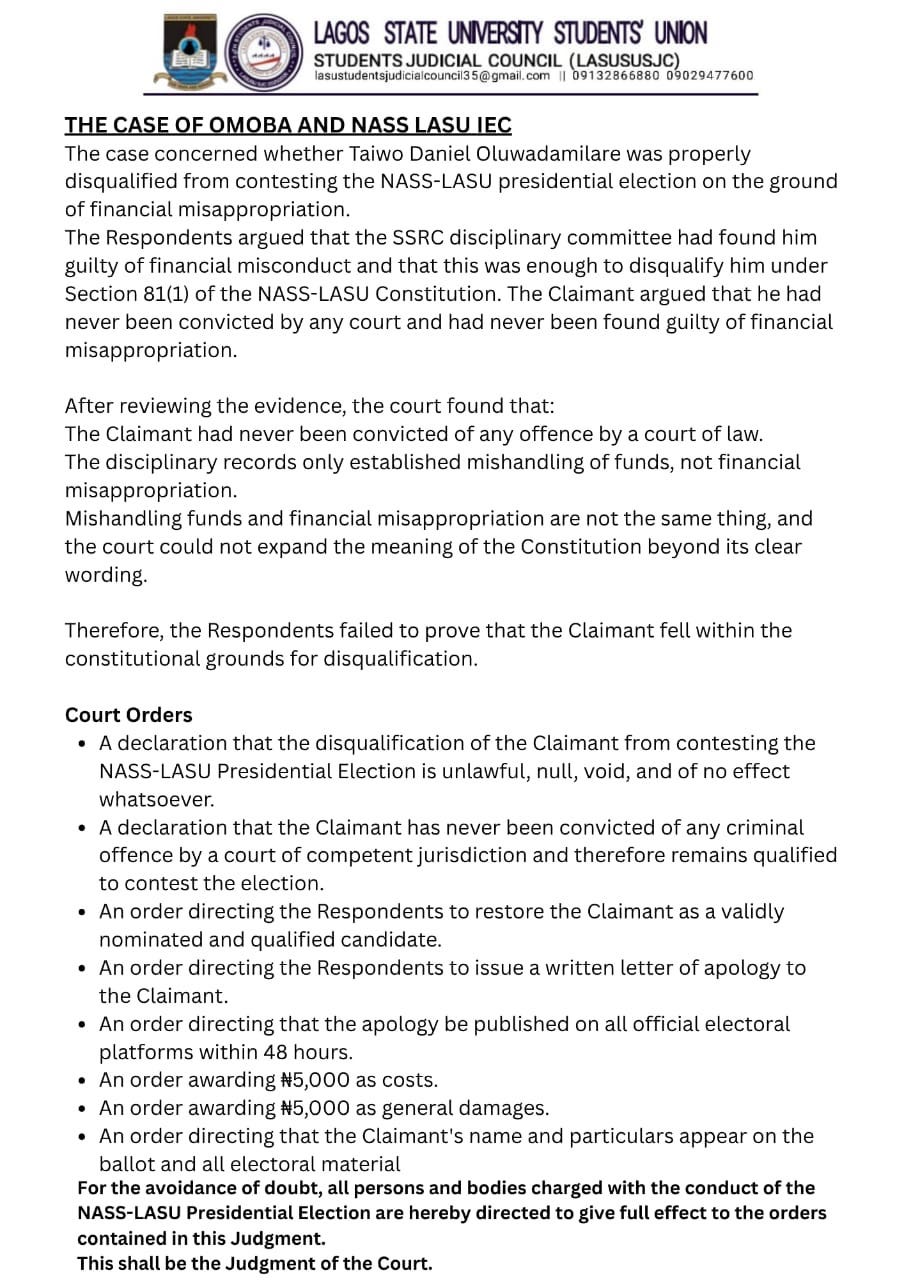
The LASUSU Judicial Council declared Omooba’s disqualification “unlawful,” ordered that he be restored as a valid candidate, directed that a written apology be issued, ordered that the apology be published on all official electoral platforms within 48 hours, and further directed that his name appear on all electoral materials.
Yet weeks after a case that dominated conversations across the Faculty of Science, many students remain unaware that a judgment was ever delivered.
This raises an important question:
If allegations and disqualification announcements were public enough to shape student opinion, shouldn’t the outcome of the case have been communicated with the same visibility?
From the beginning of the exercise down to candidate selection, NASS-LASUites and non NASS-LASUites heard the words loud and clear (about who was supposed to be on the presidential seat and who’s not supposed to be).
Legal tension arose amidst the case but when the air is finally clear again, why are students forced to sit with this unusual silence regarding the final truth.
One could imagine what does this mean not only for Omooba, but for the future of integrity, accountability, and leadership within the Faculty of Sciences itself?
Just when we thought transparency is beginning to take a better deal of the political circle, NASS-LASU has once again proved otherwise.
Something special is happening for the Class of 2025 and 2026.
Only 200 graduates will be part of a project designed to preserve their journey, celebrate their achievements, and tell their stories for years to come.
If you want to be among the graduates featured in the LASU Life Project to experience premium graduation portraits, documentary features, and unforgettable memories, now is the time to join.
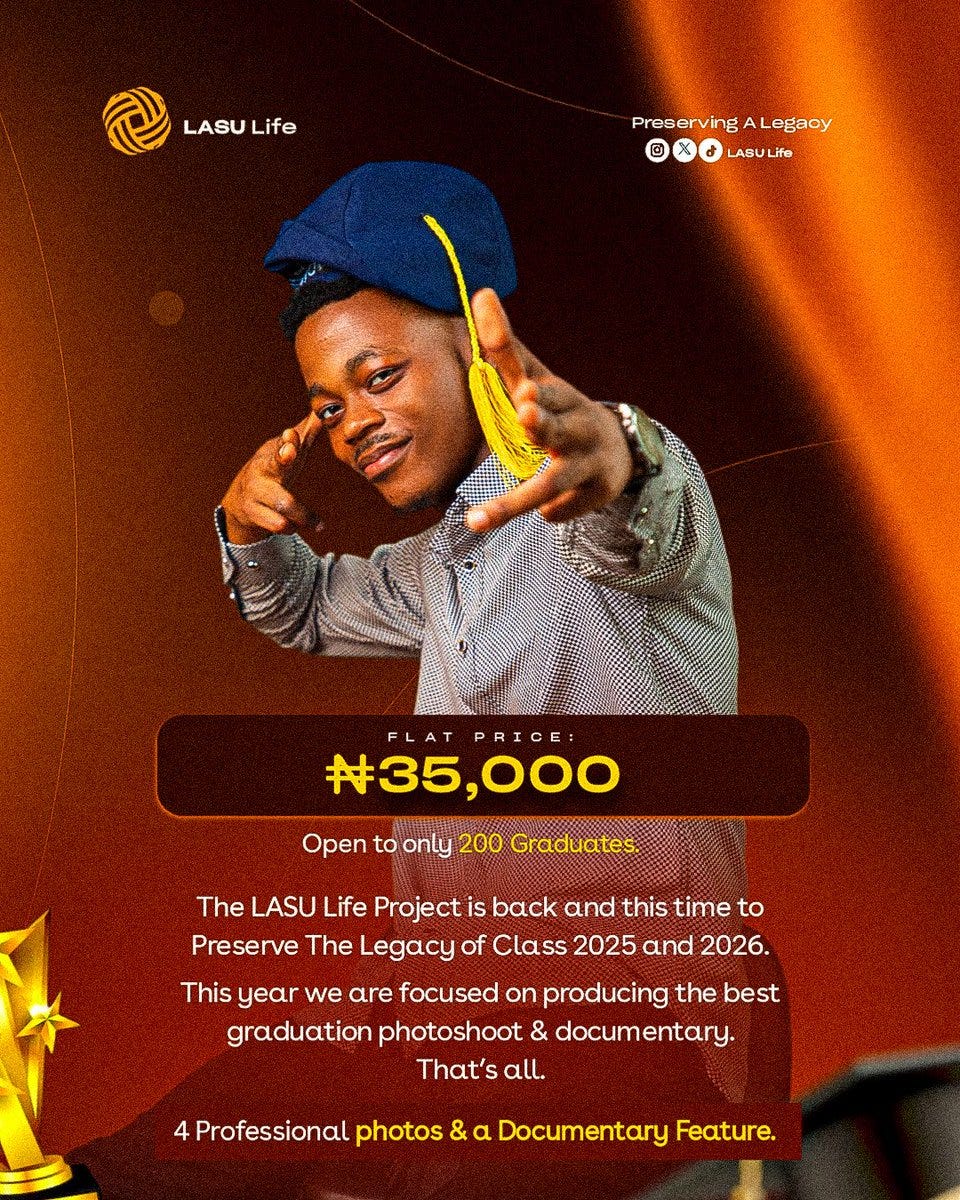
Send a WhatsApp message to our Project Sales Manager to reserve your spot now and pay later.
📝: Halimah Olawoyin & Kuti Aishah
Editors, LASU Life.
they really need to do better, hmm.